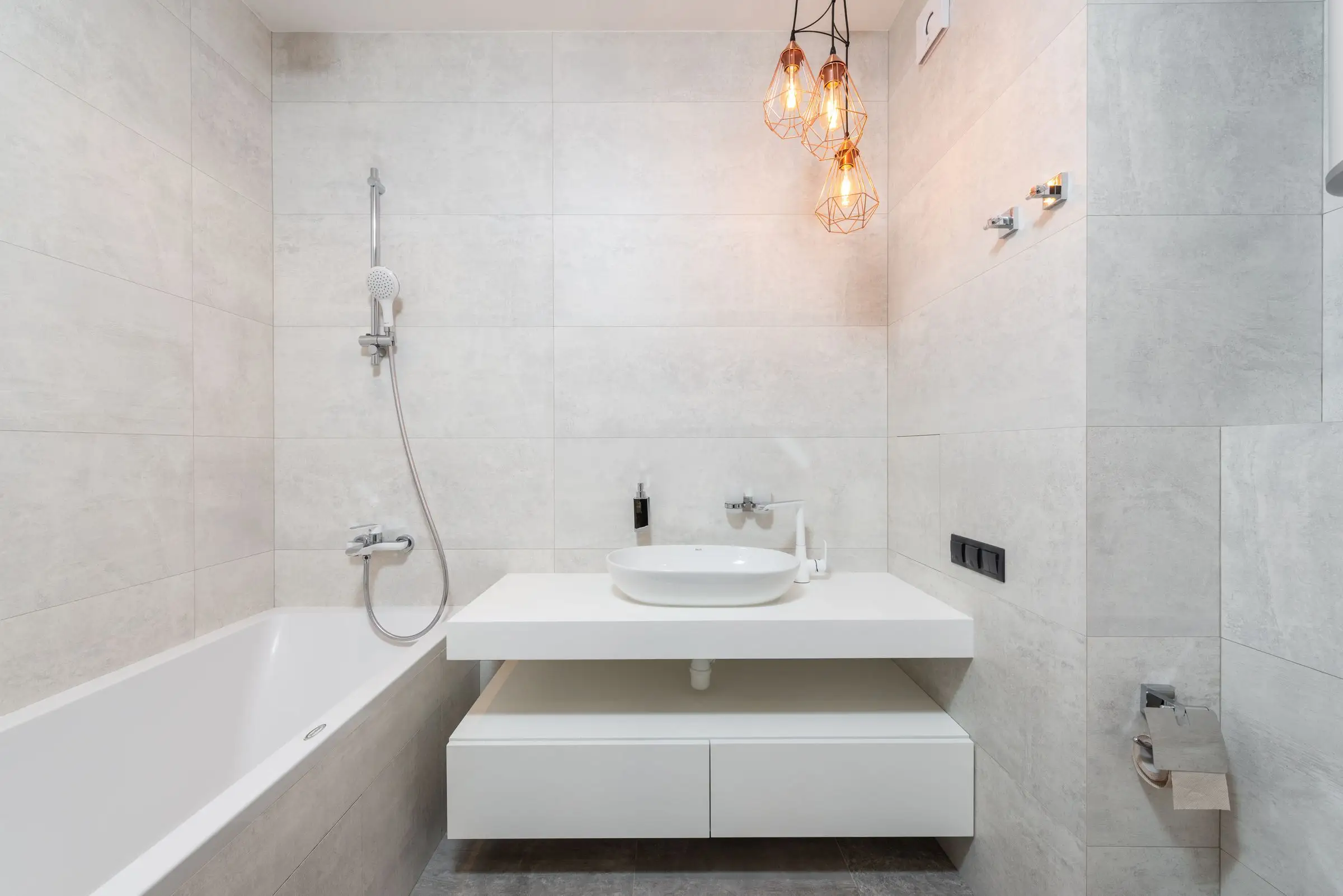
Bathroom Remodel scopes, trade sequence and planning guides
The smallest room in the house and the most crowded with trades, because everything in it is either plumbed, waterproofed or both.
Remodeling a bathroom: what the job involves
A bathroom remodel runs from a new vanity, toilet and lighting to a room taken back to the studs and rebuilt around a relocated drain. Four scopes cover nearly every project, and the question that picks between them is whether the toilet, the tub or the shower drain moves.
Bathrooms carry more trades per square foot than any other room. Demolition, rough plumbing, electrical, framing, waterproofing, tile, fixtures, glass and paint all land in a space smaller than most bedrooms, and each one waits on the last. That density is why a bathroom takes as long as it does, and why the schedule slips when a single trade is late.
Keeping every drain in place keeps the job inside the room. Moving one sends it through the floor structure, because waste lines run at a fixed fall, and that opens the ceiling below or the slab underneath.
From a cosmetic refresh to a moved drain: four bathroom remodel scopes
| Scope | Lifespan | Best for |
|---|---|---|
| Cosmetic refresh | 10 – 15 years | Vanity, toilet, faucets, mirror, lighting and paint, with the floor tile if it is tired. No wall opens and no drain moves. |
| Mid-range remodel | 15 – 25 years | Everything out to the studs and back in the same places: new tub or shower, tile, vanity, toilet, floor and ventilation. What most American bathroom remodels are. |
| Upscale remodel | 20 – 30 years | Stone or large-format tile, a curbless shower with a linear drain, a double vanity and specified fixtures. The waterproofing detail is what you are paying for, and it is the part nobody sees. |
| Layout change | 20 – 30 years | Moving the toilet, the tub or the shower. Waste lines run in the floor at a fixed fall, so relocating a drain means opening the ceiling below or the slab underneath. |
Lifespan is how long a bathroom remodeled at that scope usually goes before the next remodel, assuming the waterproofing behind the tile was built correctly.
Waterproof the shower before the tile goes on
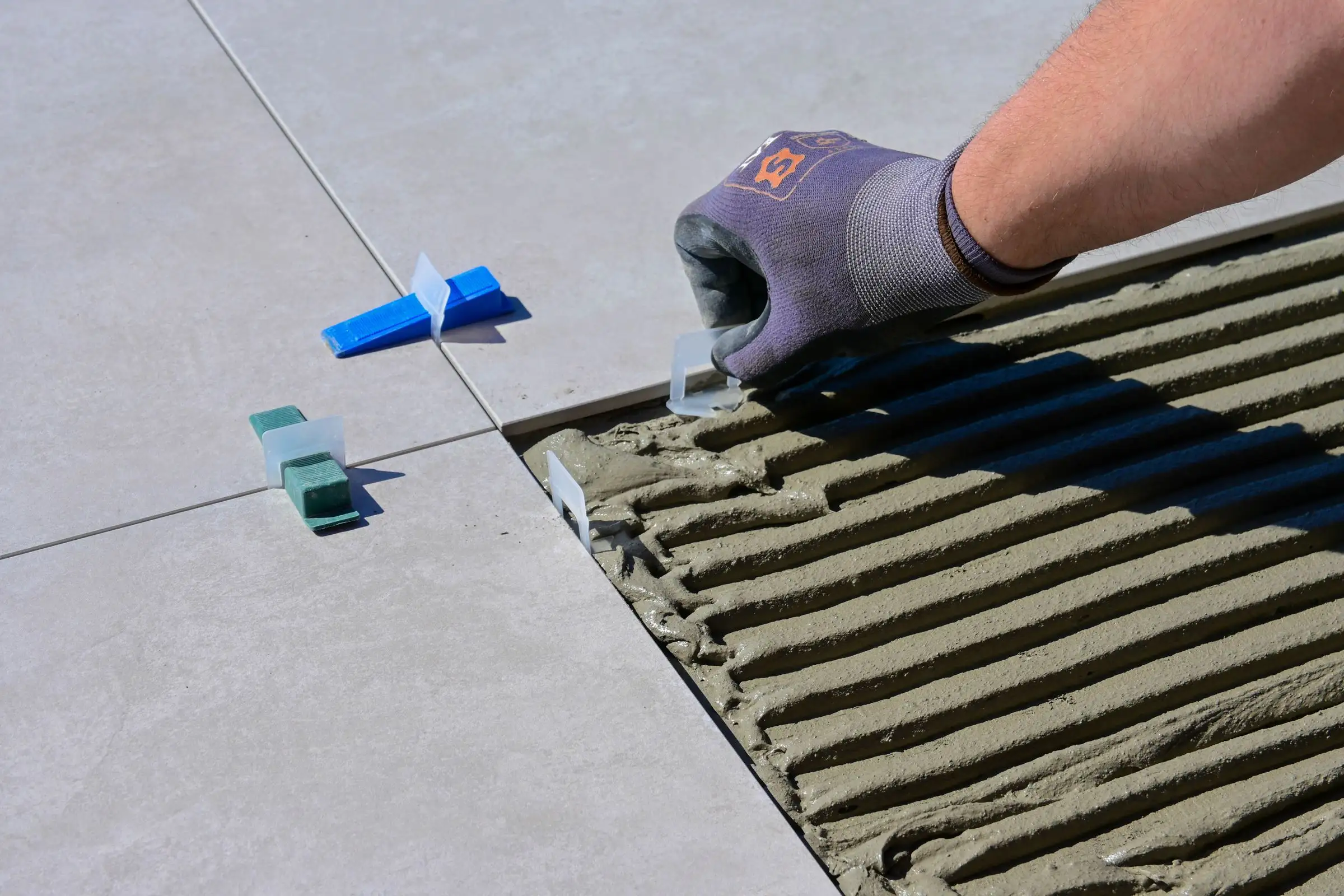
Waterproofing is the only part of the room you will never see again and the one that decides whether it lasts twenty years
Steps, timeline and permits: bathroom remodeling questions
What are the steps of a bathroom remodel?
Design and order the fixtures, then demolition to the studs. Rough plumbing, framing and electrical follow, with the fan ducted outside, and the inspector signs off. Then backer board and waterproofing, tile and grout, the vanity, toilet and trim, and the shower glass last, once the tile has cured.
How long does a bathroom remodel take?
Expect two to four weeks for a mid-range job that keeps every fixture in place, with the room out of use for most of it. Mortar and grout each need time to cure, so tile sets the pace and no extra crew shortens it.
Is a walk-in shower worth it over a tub?
It depends on which bathroom. In a primary bath it is usually the better room and it ages well. In the only full bath in the house, removing the last tub can cost you at resale, because buyers with small children look for one.
Do I need a permit to remodel a bathroom?
For a cosmetic refresh where nothing moves, usually not. The moment plumbing is rerouted, a circuit is added or a wall opens, yes, and in most jurisdictions the inspection is the only independent check that the waterproofing behind the tile was done correctly.
Should I hire a general contractor or separate trades?
A general contractor once the room goes to the studs: several trades have to follow one another in a tight space, and someone has to own the schedule and the waterproofing. For a refresh with no plumbing changes, a single remodeler can carry the job.
Can I remodel a bathroom myself?
Paint, a vanity swap, a new faucet, a toilet on the existing flange and new lighting on existing wiring are reasonable DIY work. Waterproofing a shower, moving a drain and adding a circuit are not, because the mistakes stay hidden until they leak.
The calculator prices bathrooms per square foot on the same national data as every guide on this page; no phone number, no lead form.
Measure the room Before the first quote