
Gutters new gutters: materials, sizing and drainage
The simplest system on the house, and the one whose failure ends up in the foundation.
What a gutter replacement involves
Gutter replacement takes down the old runs, repairs the fascia they hang on, and installs new gutters pitched toward downspouts that carry roof water away from the foundation. It is due when seams leak, sections sag or pull away from the eave, rust shows through, or water spills over the edge in every hard rain.
Most houses end up with seamless aluminum, rolled to length on site so the only joints sit at the corners. Vinyl suits a shed or a short run a homeowner fits alone; steel and copper suit houses where strength or appearance justify them.
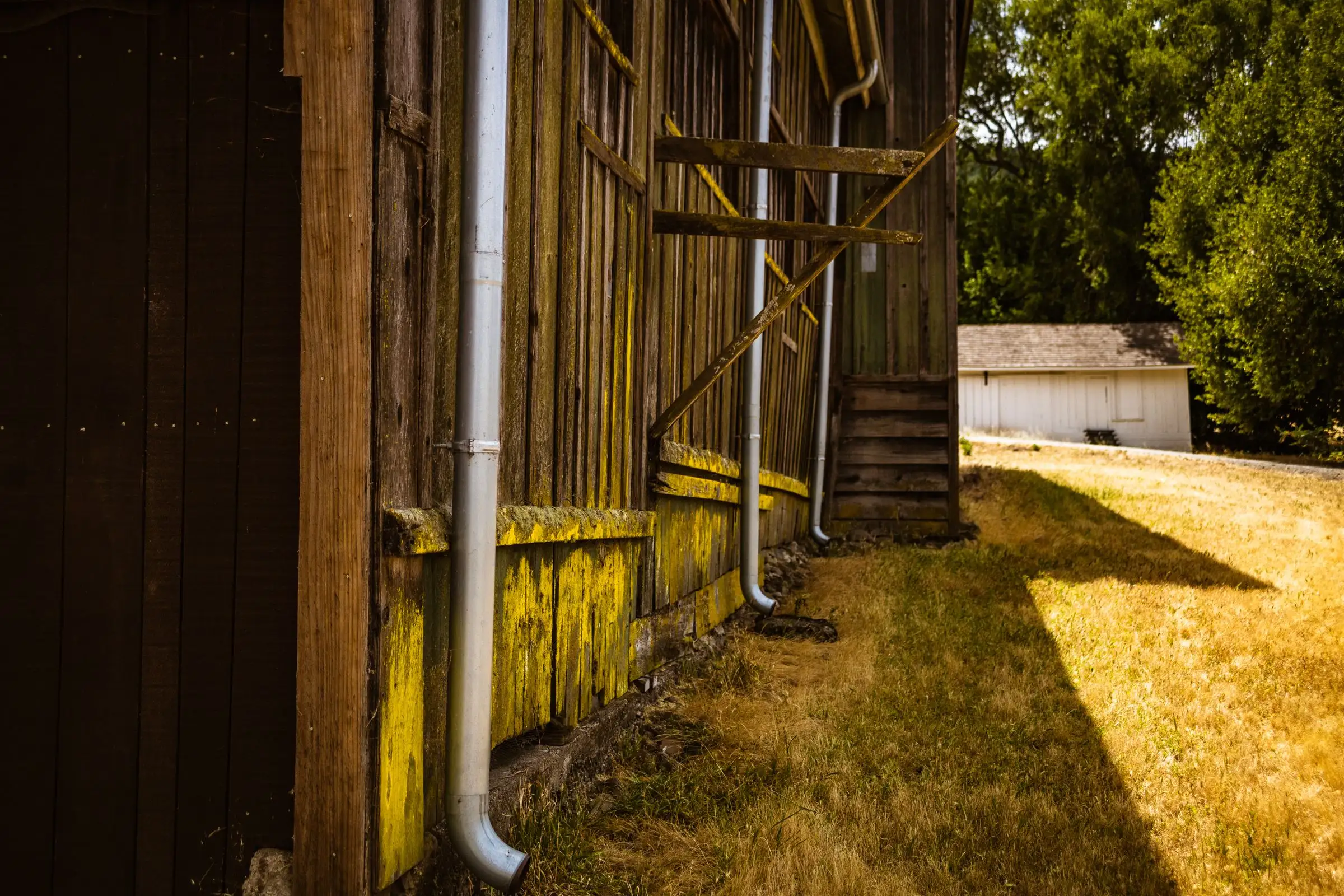
Where the water goes matters as much as the gutter. Each downspout should discharge well clear of the foundation, through an extension, a splash block or a buried drain line, or the system has only moved the problem a few feet.
Aluminum, vinyl, steel or copper: choosing gutters
| Material | Lifespan | Best for |
|---|---|---|
| Vinyl | 10 – 20 years | Snap-together sections sold by the length. The only gutter a homeowner can genuinely fit alone, and the first to sag and crack in hard sun or hard frost. |
| Seamless aluminum | 20 – 30 years | What most American houses get, rolled to length on the driveway so the only joints are at the corners. The default for good reason. |
| Galvanized steel | 20 – 30 years | Stiffer than aluminum and worth the difference where ladders lean on it or ice loads it. It rusts eventually, at the cut ends first. |
| Copper | 50 – 100 years | Soldered rather than sealed, and it outlives the roof it drains. Bought for the patina as much as the century of service. |
Lifespans assume gutters cleared at least once a year, hangers kept tight, and a sound fascia behind them. Rotten fascia ends more gutter runs than worn-out metal does.
Plan the gutter downspouts before the gutter material

A gutter that empties beside the foundation has moved the water four feet and solved nothing. Where it ends matters as much as what it is made of
Signs, sizing, guards: gutter questions
How do I know my gutters need replacing?
Water dripping from seams and corners, sections sagging between hangers or pulling off the fascia, rust or cracks along the trough, peeling paint and stains on the siding below, and puddles or erosion along the foundation after rain.
Seamless or sectional gutters?
Seamless, in almost every case. It is rolled to length on site so the only joints are at the corners, and joints are where gutters leak. Sectional vinyl earns its place on a shed or a run a homeowner will fit alone.
What size gutter do I need?
Five inch K-style handles most roofs. Six inch suits a steep roof, a large roof plane draining to one run, or a region that gets its rain in a few heavy storms; pair it with larger downspouts so the extra capacity has somewhere to go.
Do gutter guards work?
Under heavy tree cover, micro-mesh guards cut cleaning down to an occasional brushing. Away from trees they solve a problem the house does not have, and no guard makes a gutter maintenance-free, whatever the door-to-door pitch says.
How far should downspouts drain from the house?
Far enough that the water cannot run back toward the foundation: an extension or splash block onto ground that slopes away, or a buried line to daylight. A downspout that empties at the wall feeds the basement.
Can I install gutters myself?
Sectional vinyl on a single-story run, yes. Seamless aluminum, no: it is rolled on site by a machine on the truck. The part that defeats most DIY installs is not the hanging, it is setting a consistent fall toward each outlet.
With the material and size chosen, the calculator gives the order of magnitude for your own run of eaves; no phone number, no lead form.
Measure the eaves Before the first quote