Home Warranty coverage, caps and contract comparisons
A service contract on the machinery of the house, sold on what it covers and decided by what it caps.
What a home warranty is
A home warranty is worth holding when your systems are old enough to fail and you could not absorb the failure in cash, and on a house with new equipment still under manufacturer warranty it usually is not.
It is a service contract, not insurance. It pays to repair or replace covered items that fail from normal use, up to a stated cap, and you pay a monthly premium plus a flat fee on every visit. Insurance covers sudden damage from a covered peril; these are different products and most homeowners with a warranty carry both.
The advertising is written around what is covered. The contract is written around what is capped and what is excluded, and those two paragraphs decide whether a claim on a failed compressor pays for the year or pays for a fraction of the repair. This cluster reads the contracts rather than the brochures.
Home Palais never collects your name, your phone number or your address for a provider. Every link here goes to the company that sells the plan, and nothing on this site is a quote form.
The six home warranty terms that decide a claim
Every home warranty is sold on its list of covered items and settled on these six clauses. Read them in this order, before the price.
| Term | What it is | What to check before signing |
|---|---|---|
| Coverage cap | The most the provider will pay on one covered item, usually per year. | Compare the cap against what the repair actually costs. A $3,000 cap on a system that costs $8,000 to replace is a contribution, not a replacement. |
| Aggregate limit | The most the contract will pay across everything, over the agreement term. | Two large claims in one year can exhaust a low aggregate. Check whether the limit resets on renewal or runs for the term. |
| Service call fee | A flat amount paid to the technician on every visit, whatever the repair costs. | It is charged per claim, not per year. Some providers let you buy it down against a higher premium, which only pays off if you expect several claims. |
| Exclusions | The list of what the contract will not pay for, item by item and part by part. | This is where a home warranty is actually written. Pre-existing conditions, improper installation, code upgrades and cosmetic problems are excluded on essentially every plan. |
| Contractor network | The pool of companies the provider assigns your job to. | You do not choose. The value of the contract depends entirely on which companies serve your area, so search the provider name plus your city before buying. |
| Waiting period | The gap between buying the plan and being able to claim on it. | Typically around 30 days. Anything that fails inside it, or was failing before it, is a pre-existing condition and is not a claim. |
Terms change without notice and are written per state. Ask for the sample contract for your own state and read the exclusions section before the price page; it is the part no provider advertises and the only part that decides an outcome.
How Home Palais reads a home warranty
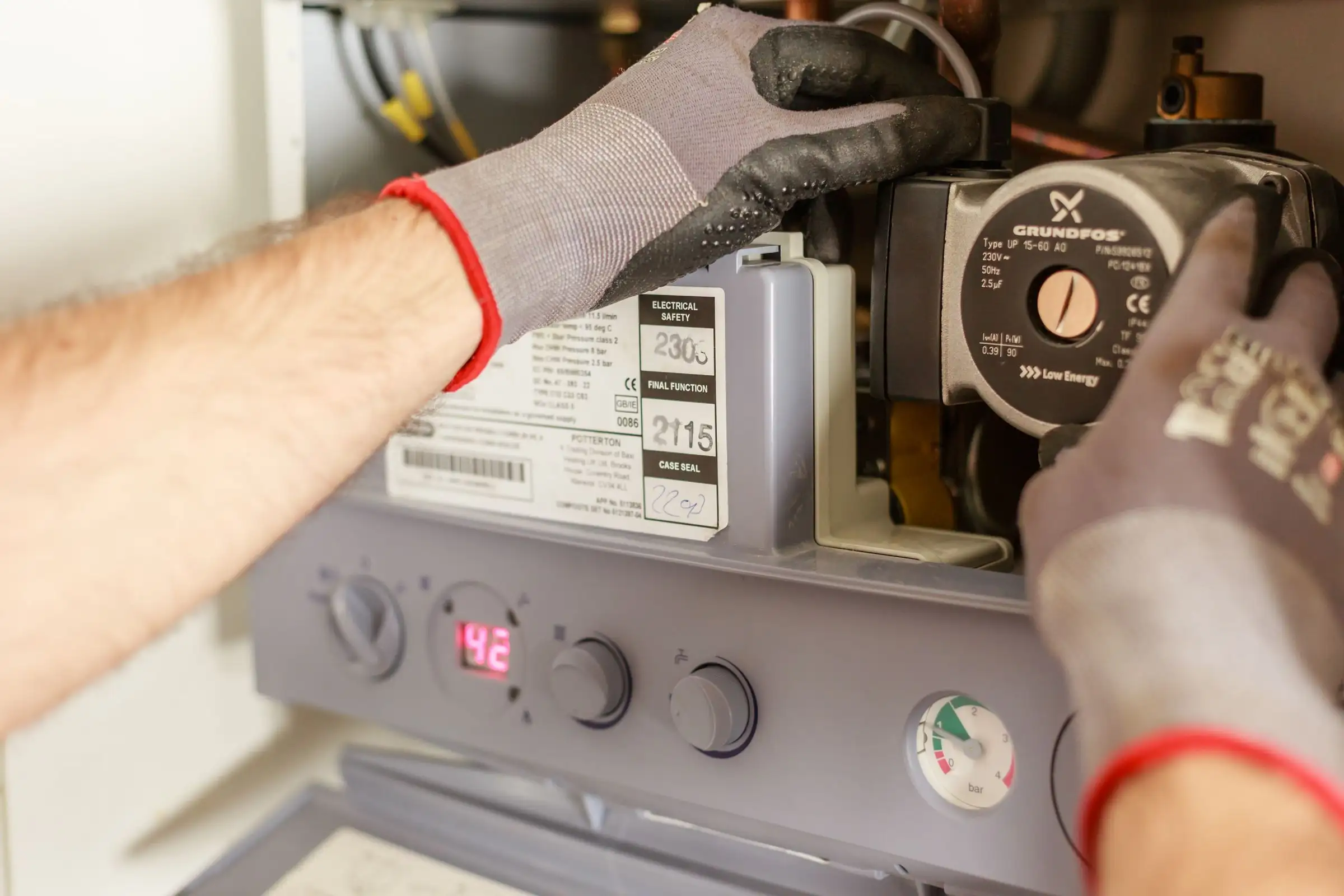
Ask what it pays on the compressor. Everything else in the brochure is downstream of that one number
Home warranty questions, answered
Is a home warranty worth it?
It is worth it when your systems are old enough to fail and a five thousand dollar failure would be a problem. On a house with new equipment under manufacturer warranty, the premium and the service fees usually exceed what the contract pays back, and the same money in a savings account covers the same risk without an exclusions list.
Does a home warranty replace homeowners insurance?
No, and no lender accepts it in place of one. Insurance covers sudden damage from a covered peril such as storm, fire or theft. A home warranty covers mechanical failure from normal use. They pay for entirely different events.
Why are claims denied?
Almost always for one of three reasons: the item was already failing when coverage started, there is no documented maintenance history, or the specific part is named in the exclusions. Keep service records and photographs for anything you expect to claim on.
Can I choose my own contractor?
Not on the major plans. The provider assigns a company from its network, which is why the contractor network is one of the six terms worth checking before you buy rather than after your first claim.
Can I cancel a home warranty?
Yes. Most providers refund in full inside the first 30 days, less an administrative fee, and allow cancellation later on a prorated basis. The fee schedule varies by state, so read the version of the contract written for yours.
Does it cover a roof leak?
Rarely, and never as roofing coverage. A small number of top-tier plans include limited roof leak repair, capped low enough that it covers a patch rather than a replacement. A roof at the end of its life is a roofing project, not a warranty claim.
Home Palais compares contracts on published terms, dated and linked. No quote form, no phone number, nothing collected on this domain.
Read the contract first Before the premium