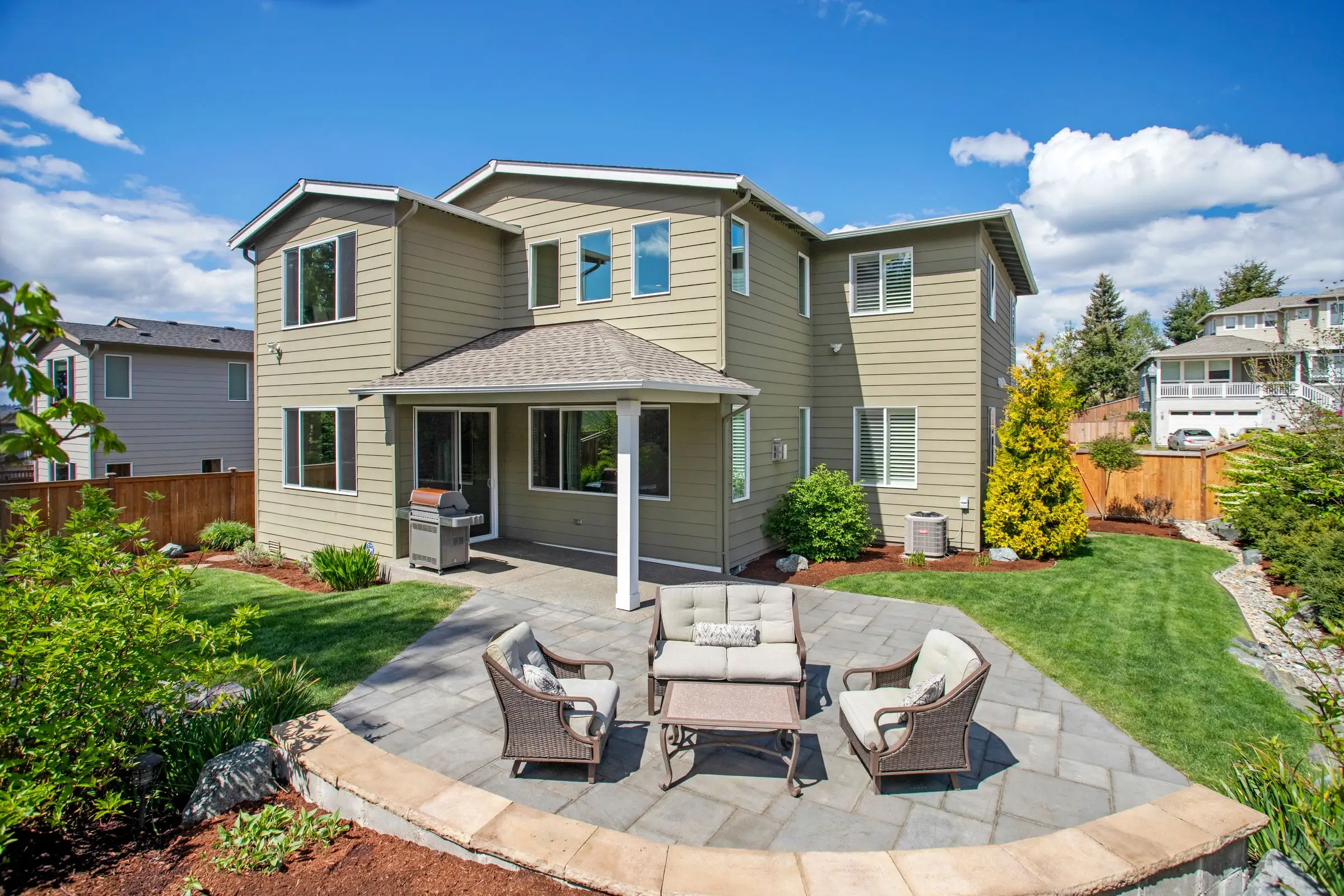
Landscaping Cost by scope, landscaped area and quality tier
Priced per square foot of the ground actually being worked on, and decided by how much of it gets built rather than planted.
What landscaping costs
A landscaping project runs $2,000 – $40,000, and the spread is wider than any other project on this site for one reason: planting and paving the same ground are not the same job, and they differ by a factor of three.
Landscaping is priced per square foot of landscaped area, meaning the part of the lot being worked on. Not the lot. A front-yard refresh is often 400 to 800 sq. ft. on a lot ten times that size, and pricing against the deed rather than the plan is the fastest way to a quote nobody can explain.
This guide takes the number apart. It prices each scope per square foot, scales it by landscaped area, splits the bill into product and labor, and lists what gets added after the base, starting with the work that shows least and matters most: grading and drainage.
Nothing here asks for your address or your phone number. When you want real quotes, the checklist near the bottom tells you what a serious one has to contain.
What each landscaping scope costs
Installed cost per square foot of landscaped area, covering the work and the plant or paving material for the scope named. The total column prices each scope across 1,000 sq. ft.
| Scope | Installed cost per square foot, installed | Lifespan | On the worked example | Who it suits |
|---|---|---|---|---|
| Lawn and planting | $5 – $10 | 5 – 15 years | $5,000 – $10,000 | Soil prep, sod or seed, beds, shrubs, trees, mulch and edging. Nothing is built, so nothing needs a footing or a permit. |
| Planting with a patio | $8 – $14 | 10 – 20 years | $8,000 – $14,000 | The common job: planting plus one built element, usually a patio or a walkway. What most American yards actually get. |
| Hardscape-led | $15 – $25 | 25 – 50 years | $15,000 – $25,000 | Patios, walkways, steps and walls carrying the design. The excavation and the compacted base are the job; the paver on top is the cheap part. |
| Full design-build | $25 – $40 | 20 – 40 years | $25,000 – $40,000 | A drawn plan built in one pass: grading, drainage, irrigation, lighting, stone and mature planting. Priced as a project, not a list of tasks. |
Read down this table as a ratio rather than a menu. The same yard planted costs a third of what it costs paved, which is why the first decision in any landscape plan is how much of the ground needs to be walked on and how much only needs to be looked at.
How yard size changes the landscaping cost
The same mixed scope priced across the areas most yards are worked in. Landscaping scales with area more cleanly than a room remodel does, because there is no fixed core of plumbing or ventilation carrying a minimum.
| Landscaped area | Project cost mid-range planting with a patio |
|---|---|
| 200 sq. ft. | $1,900 – $2,500 |
| 500 sq. ft. | $4,800 – $6,300 |
| 1,000 sq. ft. | $9,500 – $12,500 |
| 2,000 sq. ft. | $19,000 – $25,000 |
| 4,000 sq. ft. | $38,000 – $50,000 |
Measure the area you intend to change, not the lot. Lawn you are keeping does not count, and neither does the ground under the house. Mobilization, delivery and a minimum crew day still put a floor under very small jobs, so the 200 sq. ft. row reads low against a real quote.
Economy, mid-range and premium landscaping costs
The same mixed scope at three levels of product and workmanship, across 1,000 sq. ft. The bands overlap because real quotes do: a plain paver set on a proper base outlasts natural stone set on sand.
| Tier | Per unit | Project cost on 1,000 sq. ft. | What it buys |
|---|---|---|---|
| Economy | $8 – $10.10 | $8,000 – $10,100 | Builder-grade product, a crew working fast, and the simplest version of the job. Buys the function, not the finish. |
| Mid-range | $9.50 – $12.50 | $9,500 – $12,500 | What most homeowners actually sign. Mid-tier product from a named manufacturer, a licensed crew, and a warranty worth reading. |
| Premium | $11.60 – $14 | $11,600 – $14,000 | Top of the product line, specialist installers, and the detailing that decides how the job looks in year fifteen. |
Above the scope, the tier is base depth, plant size and material grade. Ask how deep the compacted base under the paving goes and what plant caliper is being supplied; those two answers separate the tiers more reliably than the finish does.
Landscaping materials versus crew labor
On a 1,000 sq. ft. yard, planting with a patio, $9,500 – $12,500 before add-ons, the bill divides like this.
- Materials $3,800 – $5,000
- 40% of the bid Topsoil and amendments, sod or seed, plants and trees, mulch, edging, aggregate base, sand, pavers or stone, wall block, pipe and fittings, and lighting fixtures.
- Labor and overhead $5,700 – $7,500
- 60% of the bid Site protection, demolition and haul-away, excavation and grading, base compaction, laying and cutting, planting, irrigation trenching, cleanup, and the machine time behind all of it.
The ratio tilts toward labor as the work gets harder to reach. A back yard a mini-excavator can drive into and one where every wheelbarrow goes through a garden gate use identical materials and price differently by a quarter.
What gets added to a landscaping quote
Preparation work, as a share of the base. None of it shows on the finished yard, and all of it decides whether it lasts.
| Line item | Surcharge share of the base cost | On the example | What it covers |
|---|---|---|---|
| Grading and drainage | +8% – 25% | $750 – $3,100 | Reshaping the ground so water leaves the house. The one line worth paying for in full, because everything built on top of bad drainage fails early. |
| Irrigation system | +8% – 20% | $750 – $2,500 | Zones, heads, valves and a controller, trenched in before the sod goes down. Retrofitting it afterward means lifting what you just paid for. |
| Retaining wall | +10% – 35% | $950 – $4,400 | Engineering, footing, block and backfill drainage. Above roughly four feet most jurisdictions require a stamped design and an inspection. |
| Tree and stump removal | +5% – 20% | $500 – $2,500 | Priced by height, spread and what stands under the tree. The stump is a separate machine and often a separate line. |
| Landscape lighting | +5% – 15% | $500 – $1,900 | Low-voltage runs, transformer and fixtures, trenched with the irrigation. Cheap to include now and disruptive to add later. |
| Difficult access | +5% – 15% | $500 – $1,900 | No gate a mini-excavator fits through, a steep lot, or material that has to be wheeled in by hand. Priced in crew hours. |
| Design and permits | +3% – 12% | $300 – $1,500 | A drawn plan, and the permits any wall, grading work or impervious surface triggers in your jurisdiction. |
Grading and drainage is the line to protect when the budget tightens. It is invisible the day the job finishes and it decides whether the patio settles, the beds drown and the basement stays dry. Cut planting instead; plants can be added in any season.
How location affects landscaping cost
Landscaping is crew hours, machine hours and bulk material hauled a short distance, so the same scope carries a different rate across the country. These are indicative multipliers on the national figure, not local quotes.
| Region | Multiplier | Project cost on the worked example | Why it moves |
|---|---|---|---|
| Northeast | 1.10× – 1.25× | $10,500 – $15,600 | Highest labor rates in the country, older housing stock, and snow-load requirements that add material. |
| West | 1.05× – 1.30× | $10,000 – $16,300 | Wide internal spread. Coastal metros price like the Northeast; the interior sits near the national middle. |
| Midwest | 0.92× – 1.05× | $8,700 – $13,100 | Closest to the national number. Deep contractor supply keeps competitive pressure on quotes. |
| South | 0.85× – 1.00× | $8,100 – $12,500 | Lowest labor cost, but storm exposure raises material specification and insurance-driven demand spikes. |
Home Palais publishes no page per state, city or ZIP code. Local pricing moves faster than any static table can track, and a multiplier you apply yourself is more honest than a number claiming to know your market. Plant selection is the one genuinely regional decision here, and it is a climate question rather than a price one.
How to read a landscaping quote
Landscaping is the trade with the lowest barrier to entry on this site, which makes the quote itself the main thing you have to judge. These two lists separate a contractor from a crew with a truck.
Red flags
Walk away from a landscaping quote if
- There is no plan, only a price. A number with no drawing cannot be compared with anything.
- The base under any paving is unspecified, or described only as "prepared."
- Nothing is said about where water goes, on a job that changes the shape of the ground.
- Plants are listed by name with no size or caliper, so a two-foot shrub and a six-foot one cost the same on paper.
- There is no license, no insurance certificate, or no answer about who pulls permits for a wall.
- Payment is demanded in full up front, or in cash.
- No warranty is offered on plant material, or the warranty ends the day the crew leaves.
Questions
Ask every landscaper
- How deep is the compacted base under the paving, and what is it made of?
- Where does surface water go after this work, and what changes about that?
- What size are the plants being supplied, and what is the warranty on them?
- Is the irrigation going in before or after the sod, and who commissions it?
- How does your equipment reach the work area, and what gets protected or repaired?
- Which parts of this need a permit, and are you pulling it?
- What is included in cleanup and haul-away, and what is left on site?
What homeowners ask about landscaping cost
Why do landscape quotes vary so much on the same yard?
Because they rarely describe the same work. One quote carries a six-inch compacted base and a drainage plan; another carries pavers on sand. Compare the ground preparation first, then the plant sizes, then the totals. The cheapest quote is usually the one that leaves the most underground.
What is the cheapest way to improve a yard?
Edging, mulch and a small number of larger plants placed deliberately. Defined bed lines and clean edges change how a yard reads more than volume of planting does, and they cost almost nothing next to any built element.
Should I phase the project?
Yes, if the phases follow the order of the work rather than the order of your patience. Grading, drainage, irrigation sleeves and any wall go in first, even if the planting waits a year. Phasing that puts sod down before the sleeves are run means digging it up again.
What does a retaining wall really cost?
Between a tenth and a third more on a project this size, and it is priced by height rather than length. Above roughly four feet most jurisdictions require an engineered design, a footing, drainage behind the wall and an inspection, and each of those is a separate line.
How much should I hold back for surprises?
Around 10 to 15 percent. Landscaping hides fewer expensive surprises than an interior remodel, but buried debris, rock close to the surface and utilities in the wrong place are common enough to plan for, and a utility locate is free.
Is a landscape designer worth the fee?
On anything past planting, usually. The fee is a small share of the project and it buys a plan that several contractors can bid on the same terms, which is the only way to compare quotes honestly. Without a plan, every bid is a different project.
Figures on this page are indicative national brackets, not quotes. Your number depends on the size, complexity and condition of the job itself, and on what local crews are charging when you buy. Use them to judge a bid, not to replace one.
Cost data
- Ecostify, Landscaping cost: design, sod, hardscape and maintenance (opens in a new tab) Checked August 12, 2026
- LawnStarter, How much does landscaping cost in 2026? (opens in a new tab) Checked August 12, 2026
Projects that pair with a new yard
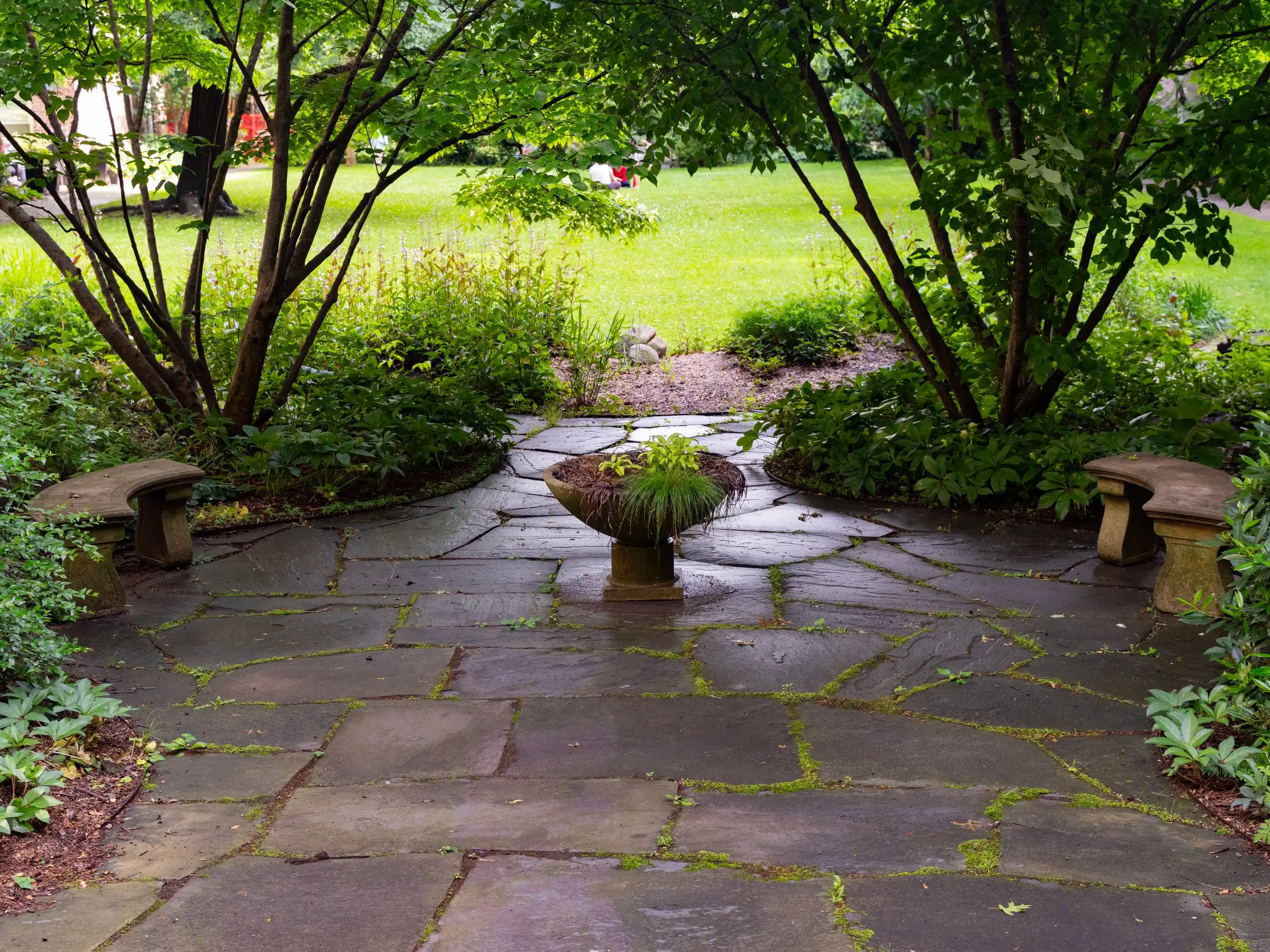
The calculator prices landscaping per square foot on the same national data as every table on this page; no phone number, no lead form.
Price it by the scope Before the first quote