New Flooring Cost by material, floor area and quality tier
Quoted per square foot on a subfloor nobody has looked at yet. That gap is where flooring budgets go.
What new flooring costs
New flooring runs $1,500 – $10,000 for a room-sized area, and most of those jobs now are luxury vinyl plank over an existing subfloor. Tile and solid hardwood cost more per square foot and last far longer, which is the entire trade in one sentence.
Flooring is priced per square foot with material and labor bundled, and that rate assumes a subfloor that is flat, sound and dry. Two quotes on the same room can differ by half simply because one of them has budgeted to fix the floor under the floor and the other has not.
This guide takes the number apart. It prices every common material, scales the job by area, splits the bill into product and labor, and lists the surcharges added after the base: tear-out, levelling, underlayment, stairs, patterns and trim.
Nothing here asks for your address or your phone number. When you want real quotes, the checklist near the bottom tells you what a serious one has to contain.
What each flooring material costs installed
Installed cost per square foot, covering material and labor on a sound and level subfloor. The total column prices each material across 1,000 sq. ft., roughly a main floor.
| Material | Installed cost per square foot, installed | Lifespan | On the worked example | Who it suits |
|---|---|---|---|---|
| Carpet | $2 – $6 | 5 – 15 years | $2,000 – $6,000 | Cheapest to buy and fastest to fit, and the only floor here that wears out rather than ages. Bedrooms and stairs, rarely anywhere water goes. |
| Laminate | $3 – $8 | 10 – 25 years | $3,000 – $8,000 | A photograph of wood under a wear layer, clicked together over foam. Convincing at a distance, and finished the day it fails at a seam. |
| Luxury vinyl plank | $4 – $12 | 15 – 25 years | $4,000 – $12,000 | The floor that took over American houses in a decade. Waterproof, forgiving of an imperfect subfloor, and impossible to refinish. |
| Engineered hardwood | $6 – $14 | 20 – 40 years | $6,000 – $14,000 | Real wood on a plywood core, stable enough for a basement or over concrete. Refinishable once or twice, depending on the veneer. |
| Solid hardwood | $8 – $18 | 40 – 100 years | $8,000 – $18,000 | The only floor on this list you can sand back to new, several times. It moves with humidity, which is why it belongs above grade. |
| Ceramic or porcelain tile | $7 – $20 | 50 – 100 years | $7,000 – $20,000 | Mostly a labor cost, and the labor is the product: flatness, layout and a proper mortar bed decide whether it lasts a lifetime or cracks in a season. |
Tile is the outlier on this table: it is mostly labor, and the labor is the product. A tile floor laid on a bed that was never flattened cracks along the grout lines within a season, whatever the tile cost.
How floor area changes the flooring cost
The same mid-range vinyl plank priced across the areas most projects fall into, from a single room to a whole main floor. Cost scales close to linearly, with the smallest jobs paying a mobilisation penalty.
| Floor area | Project cost mid-range luxury vinyl plank |
|---|---|
| 200 sq. ft. | $1,200 – $2,000 |
| 500 sq. ft. | $3,000 – $5,000 |
| 1,000 sq. ft. | $6,000 – $10,000 |
| 1,500 sq. ft. | $9,000 – $15,000 |
| 2,000 sq. ft. | $12,000 – $20,000 |
Order more material than the measured area: 5 to 10 percent for straight layouts, up to 15 for diagonals and herringbone. Dye lots vary, so buying the shortfall later rarely matches.
Economy, mid-range and premium flooring costs
The same vinyl plank at three levels of product and workmanship, across 1,000 sq. ft. The bands overlap because real quotes do: a thick wear layer laid badly loses to a mid-range plank laid on a properly prepared floor.
| Tier | Per unit | Project cost on 1,000 sq. ft. | What it buys |
|---|---|---|---|
| Economy | $4 – $6.80 | $4,000 – $6,800 | Builder-grade product, a crew working fast, and the simplest version of the job. Buys the function, not the finish. |
| Mid-range | $6 – $10 | $6,000 – $10,000 | What most homeowners actually sign. Mid-tier product from a named manufacturer, a licensed crew, and a warranty worth reading. |
| Premium | $8.80 – $12 | $8,800 – $12,000 | Top of the product line, specialist installers, and the detailing that decides how the job looks in year fifteen. |
In vinyl the tier is the wear layer, measured in mils, and the rigidity of the core. In wood it is the thickness of the veneer, which decides how many times the floor can be refinished. In tile it is almost entirely the installer.
Flooring material versus installation labor
On 1,000 sq. ft. in mid-range vinyl plank, $6,000 – $10,000 before add-ons, the bill divides like this.
- Materials $3,000 – $5,000
- 50% of the bid The flooring itself, underlayment, adhesive or fasteners, transitions and trim.
- Labor and overhead $3,000 – $5,000
- 50% of the bid Lifting the old floor, preparing and levelling the subfloor, setting the layout, cutting and fitting every course, finishing edges and stairs, and hauling the old material away.
The ratio moves sharply with the material. Carpet and vinyl are roughly an even split; tile is mostly labor, because the setting is a trade skill; and hardwood tilts to material until you add sanding and finishing on site.
What gets added to a flooring quote
Almost all of these are subfloor preparation, which is to say hours. Shown as a share of the base.
| Line item | Surcharge share of the base cost | On the example | What it covers |
|---|---|---|---|
| Tear-out and disposal | +8% – 25% | $500 – $2,500 | Lifting the old floor and hauling it away. Tile and glued-down vinyl cost the most to remove, by a wide margin. |
| Subfloor repair or levelling | +10% – 35% | $600 – $3,500 | Self-levelling compound, sheet replacement or squeak repair. Tile and hardwood are unforgiving of a floor that is not flat. |
| Underlayment and moisture barrier | +5% – 15% | $300 – $1,500 | Foam, cork or a vapour barrier under the finish. Non-negotiable over concrete, and the line a cheap quote drops first. |
| Stairs and landings | +10% – 30% | $600 – $3,000 | Every tread and riser cut and finished by hand. Priced per step by careful bidders, folded into a square-foot rate by the rest. |
| Pattern, borders and large formats | +10% – 40% | $600 – $4,000 | Herringbone, diagonal layouts, borders, or tiles large enough to demand a perfectly flat bed. Hours rather than material. |
| Furniture moving and appliance disconnect | +3% – 10% | $200 – $1,000 | Emptying the room, and disconnecting anything plumbed or wired standing on the floor. |
| Trim and transitions | +5% – 15% | $300 – $1,500 | Baseboard, shoe moulding, thresholds and door undercuts. Small, visible, and what separates a finished floor from a laid one. |
Subfloor levelling is the line to settle before signing. Every hard floor demands flatness, tile and long planks most of all, and a quote that has not opened a corner to look is guessing at the largest variable in the job.
How location affects flooring cost
Flooring ships from the same distributors everywhere. The installer does not, and neither does a third-floor walk-up.
| Region | Multiplier | Project cost on the worked example | Why it moves |
|---|---|---|---|
| Northeast | 1.10× – 1.25× | $6,600 – $12,500 | Highest labor rates in the country, older housing stock, and snow-load requirements that add material. |
| West | 1.05× – 1.30× | $6,300 – $13,000 | Wide internal spread. Coastal metros price like the Northeast; the interior sits near the national middle. |
| Midwest | 0.92× – 1.05× | $5,500 – $10,500 | Closest to the national number. Deep contractor supply keeps competitive pressure on quotes. |
| South | 0.85× – 1.00× | $5,100 – $10,000 | Lowest labor cost, but storm exposure raises material specification and insurance-driven demand spikes. |
Delivery to an upper floor is the variable no map shows, and on a walk-up it costs more than the regional gap.
How to read a flooring quote
By the time you are comparing quotes, the cost question has become a preparation question. These two lists separate a quote worth taking seriously from one that will be revised once the old floor comes up.
Red flags
Walk away from a flooring quote if
- Nobody looked under the existing floor before quoting.
- The quote does not say whether the old floor is being removed or covered.
- Subfloor preparation is absent, or described as "if required" with no rate.
- The product line and its wear layer or veneer thickness are unnamed.
- Stairs are folded into the square-foot rate rather than priced per step.
- Transitions, thresholds and door undercuts are not mentioned.
- The installer is not named, because on tile and hardwood the installer is the product.
Questions
Ask every flooring installer
- How flat is my subfloor, and what did you measure it with?
- What happens, and what does it cost, if you find damage under the old floor?
- Which exact product, and what wear layer or veneer thickness?
- How much waste are you ordering, and what layout is that based on?
- How are the stairs priced, and how are the nosings finished?
- What happens at doorways, appliances and the transition to other rooms?
- Who moves the furniture and disconnects the appliances?
What homeowners ask about flooring cost
Why do flooring quotes vary so much on the same room?
Because they assume different subfloors. A quote that includes levelling compound, tear-out and disposal will look expensive beside one that assumes the old floor stays and the new one goes on top, right up until the day it cannot.
Is it cheaper to do the whole house at once?
Per square foot, yes. One mobilisation, one delivery, one dye lot, and the crew is already set up. Phasing room by room costs more each time and risks a visible difference between batches of the same product.
What does tear-out add?
Typically 8 to 25 percent of the base cost, and glued-down vinyl and tile sit at the top of that band because removal is slow and the debris is heavy. It is the line most often left off a low quote.
Should I install flooring myself?
Click-together vinyl plank and laminate in a square room are within reach of a careful DIYer. Tile, sheet goods and site-finished hardwood are not: the skill is in the preparation and the layout, and mistakes there are permanent.
Does new flooring add home value?
Consistently, and hardwood most of all. Buyers price down worn carpet aggressively, so replacing it often returns more than its cost in negotiation terms even when it does not in appraisal terms.
How much extra material should I order?
Five to ten percent over the measured area for a straight layout, and up to fifteen for diagonal or herringbone. Keep a box after the job: dye lots change, and a future repair with mismatched planks looks worse than the damage.
Figures on this page are indicative national brackets, not quotes. Your number depends on the size, complexity and condition of the job itself, and on what local crews are charging when you buy. Use them to judge a bid, not to replace one.
Cost data
- HomeGuide, How much does flooring installation cost? (opens in a new tab) Checked August 11, 2026
- Ecostify, New flooring cost, every type compared (opens in a new tab) Checked August 11, 2026
Projects that pair with new floors
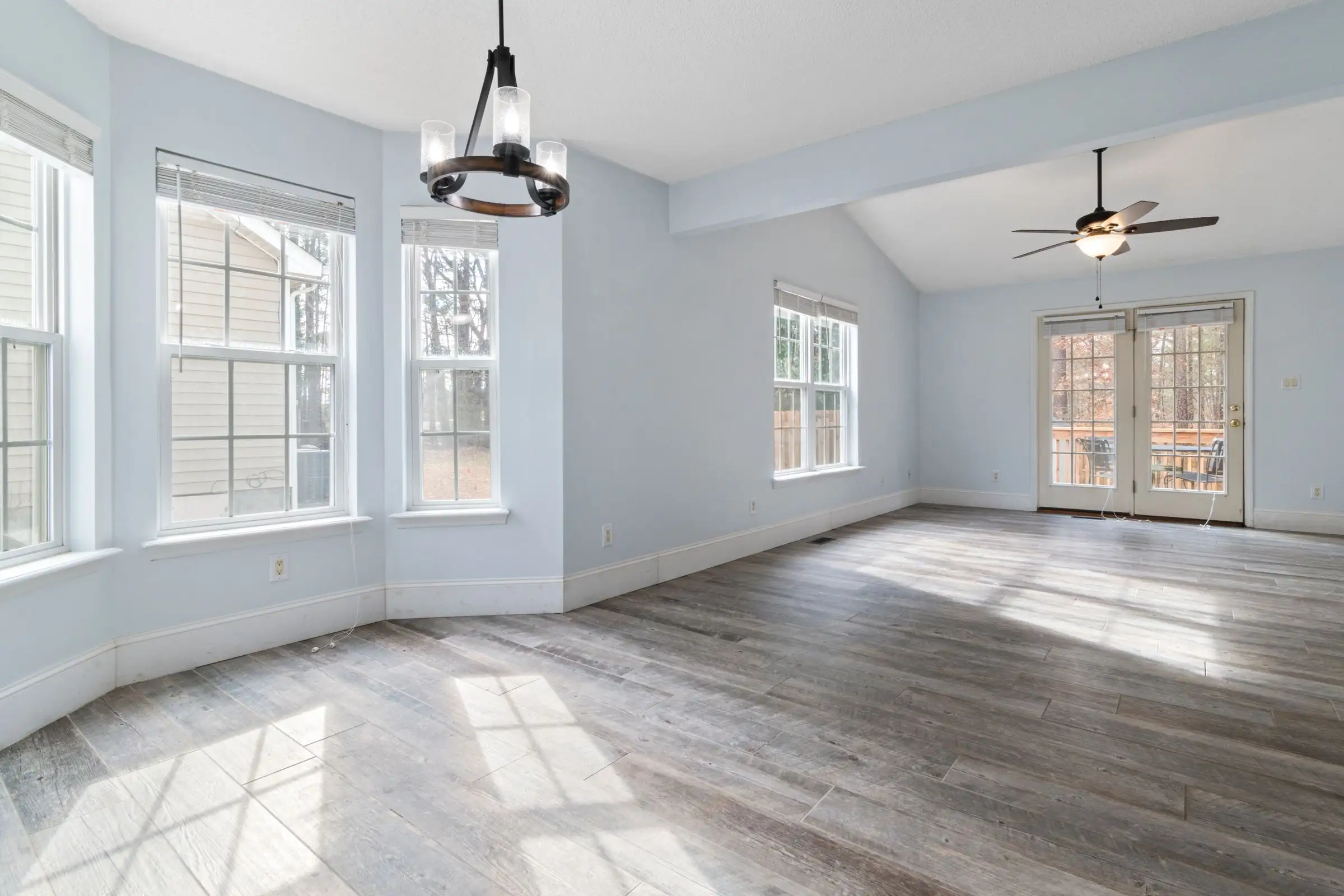
The calculator prices flooring per square foot on the same national data as every table on this page; no phone number, no lead form.
Price it room by room Before the first quote