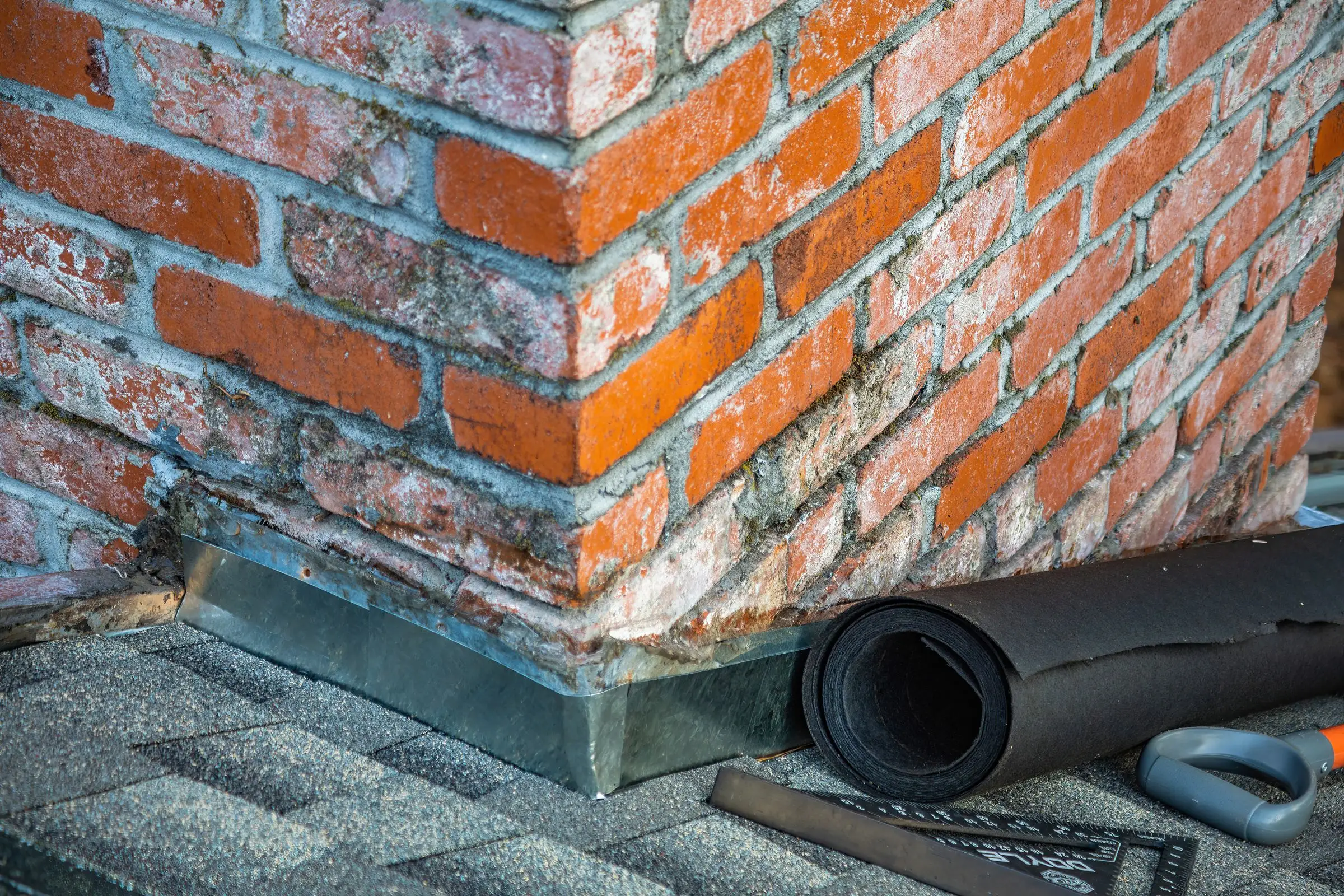
New step flashing set into a brick chimney on a shingle roof, with a roll of underlayment and tools beside it

Best Roof Sealants by job, chemistry and roof type

There is no best roof sealant. There is the one that bonds to your roof, in your weather, for the repair you are actually making.

Scroll

Start with the answer

Match the roof sealant chemistry to the job

There is no best roof sealant, only the right chemistry for the job, and one question settles most of it: does water stand on the roof, or does it drain. Buying the wrong chemistry is the usual reason a repair fails inside a season, far more often than buying the cheap brand.

Sealants split into two families that get shelved together and are not interchangeable. Coatings are rolled or sprayed over a whole roof and rebuild its surface: silicone for flat roofs that hold water, acrylic for sloped roofs that shed it. Sealants come in a tube or a tub and close one joint: asphalt-based cement for shingles, clear elastomeric for anything visible, butyl tape for a seam, and a metal-specific caulk for panels that expand all day.

Every figure below is published by the manufacturer or the retailer, with the source and the date it was checked under each entry. There are no prices on this page: they move week to week, and a number we cannot stand behind is worse than a link that shows you the current one.

Nothing here is a substitute for a roof that has reached the end of its life. Sealant buys a season, sometimes several. If the field has lost its granules or the deck is soft, the product you need is a new roof.

Side by side

What each roof sealant type is for

The whole guide in one table: chemistry, the surface it bonds to, and the figure the manufacturer publishes. Read down the "best for" column first, then go to the entry that matches your job.

Product Best for Type Published figure
GacoRoof 100% Silicone Roof Coating Flat roofs and standing water 100% silicone coating, rolled or sprayed 100 sq. ft. per gallon per coat on a smooth surface, less on a textured one.
Black Jack Elasto-Kool 1000 Recoating a sloped roof Siliconized acrylic elastomeric coating 50 to 75 sq. ft. per gallon on the 5-gallon pail.
Henry 208R Rubberized Wet Patch A leak in the rain Rubberized asphalt roof cement, trowel or cartridge 100% wet surface adhesion per ASTM D3409.
Sashco Through the Roof! Repairs you will see Clear co-polymer rubber elastomeric sealant, cartridge Up to 600% stretch.
EternaBond RoofSeal Split seams and tears Butyl MicroSealant tape with UV-stable backing 35 mil total.
Titebond WeatherMaster Metal Roof Sealant Metal panels and flashing Advanced polymer sealant, cartridge ASTM C920, Type S, Grade NS, Class 50.

Warranty lengths are material warranties from the manufacturer, and they cover the product rather than the labor or the roof under it. All of them assume the surface was clean, dry where the product requires dry, and coated at the published rate.

The picks

Six roof sealants and coatings, six jobs

Coatings

Roof coatings, for a whole roof

100% silicone coating, rolled or sprayed

Best for a flat or low-slope roof GacoRoof 100% Silicone Roof Coating

The coating to use where water sits rather than runs. Silicone is the one chemistry that does not soften under permanent ponding, which is what kills acrylic on a flat roof, and it goes over an existing roof as a seamless membrane rather than as a patch. Expensive per gallon and worth it on a roof you intend to keep.

Coverage
100 sq. ft. per gallon per coat on a smooth surface, less on a textured one.
Warranty
50-year limited material warranty.
Ponding water
Rated for permanent ponding, which acrylic coatings are not.
Substrates
Flat and sloped roofs: garages, patio covers, sheds, barns, mobile homes, RVs.

What it does well

  • Holds up under standing water, where acrylic breaks down.
  • Seamless once cured, so there is no lap to fail.
  • Reflective white surface cuts attic heat in summer.

What it does badly

  • The most expensive option per square foot on this page.
  • Silicone attracts dirt and greys off; it stays waterproof but stops being white.
  • Nothing else bonds to cured silicone, so the next coating has to be silicone too.

Siliconized acrylic elastomeric coating

Best budget coating for a sloped roof Black Jack Elasto-Kool 1000

The cheap way to recoat a roof that sheds water. Acrylic is the oldest elastomeric chemistry and the least expensive, and on a sloped roof that drains properly it does the job for a fraction of what silicone costs. On a roof that ponds it will not last, and no price makes that a good trade.

Coverage
50 to 75 sq. ft. per gallon on the 5-gallon pail.
Warranty
10-year limited warranty.
Elongation
Expands and contracts up to 300%.
Finish
Reflective white; silicone-enhanced acrylic.

What it does well

  • The lowest cost per square foot of any coating here.
  • Water-based, so cleanup is a hose rather than a solvent.
  • Reflective, which is the point on a garage or a mobile home in the South.

What it does badly

  • Not for ponding water. Acrylic softens where water stands.
  • Weathers off faster than silicone, so plan on recoating.
  • Needs a dry stretch: rain before it cures washes it off the roof.

Sealants

Roof sealants, for one joint

Rubberized asphalt roof cement, trowel or cartridge

Best for a leak you have to stop today Henry 208R Rubberized Wet Patch

The one product on this page designed to be applied to a wet roof in the rain. It is asphalt cement, so it is black, permanent and ugly, and it belongs under a shingle or around a vent boot rather than anywhere you can see from the yard. Keep a cartridge in the garage before you need it.

Wet adhesion
100% wet surface adhesion per ASTM D3409.
Standard
Meets or exceeds ASTM D4586, Type I.
Solids
78% solids by weight; refined asphalt base.
Application
0°F to 120°F, including in driving rain.

What it does well

  • Works in the weather that caused the leak, not after it clears.
  • Sticks to wet, frozen and dirty surfaces where sealants slide off.
  • Sold in a caulk tube and in gallons, so the same product covers both scales.

What it does badly

  • Permanently black and visible on anything but a dark roof.
  • Asphalt-based, so it must not go under a silicone or acrylic coating without a primer.
  • A repair, never a finish: it hides the damage as well as sealing it.

Clear co-polymer rubber elastomeric sealant, cartridge

Best where the repair will be visible Sashco Through the Roof!

Dries clear and stretches further than anything else here, which makes it the sealant for skylight edges, flashing lines and anywhere a black smear would be the thing you notice from the driveway. It also goes on wet, so it competes with asphalt cement on emergencies where looks matter.

Elongation
Up to 600% stretch.
Application
0°F to 120°F, on wet surfaces and in rain or snow.
Tack-free
30 minutes; full cure in about a week.
Adhesion
Metals, plastics, concrete, brick and existing roof patches, without discoloring them.

What it does well

  • Clear, so it disappears on shingles, tile, metal and glass alike.
  • The elongation figure is the highest on this page, which matters on joints that move.
  • Paintable once cured.

What it does badly

  • Sold in cartridges, so it is the wrong scale for anything larger than a joint.
  • A week to full cure, against thirty minutes to tack-free.
  • Solvent-based, and it smells like it until it cures.

Butyl MicroSealant tape with UV-stable backing

Best for a seam or a tear EternaBond RoofSeal

A tape that behaves like a permanent repair. It is 35 mil of non-curing butyl with a built-in primer, and it goes over a split seam, a torn membrane or a lap that has opened without cutting anything out. Surface preparation is the whole job: it bonds once, and it does not come off.

Thickness
35 mil total.
Warranty
15-year manufacturer warranty.
Service range
-70°F to 212°F.
Bonds to
EPDM, TPO, Hypalon, aluminum, galvanized steel, wood and fiberglass.

What it does well

  • No cure time: the repair is finished when the roll runs out.
  • The only product here that works on a single-ply membrane without a compatible primer.
  • UV-stable backing, so it does not need coating over.

What it does badly

  • Unforgiving. Placed once, it cannot be repositioned.
  • A dirty or damp surface is the usual reason it fails.
  • White tape on a dark roof is visible from the ground.

Advanced polymer sealant, cartridge

Best for metal panels and flashing Titebond WeatherMaster Metal Roof Sealant

Metal roofs move all day as they heat and cool, and a sealant that cannot follow that movement tears itself off the panel by the second summer. This one is rated Class 50, meaning it takes 50% joint movement, and it bonds to the Kynar finish that most panels are coated with.

Standard
ASTM C920, Type S, Grade NS, Class 50.
Service range
-75°F to 212°F for white and colors.
Coverage
53 linear feet per 10.1 fl. oz. at a 3/16 in. bead.
Adhesion
Kynar-coated metal, aluminum, galvanized steel and copper.

What it does well

  • Class 50 movement, which is what a metal seam actually demands.
  • Bonds to factory-coated panels without a primer.
  • Paintable, and sold in colors that match panel finishes.

What it does badly

  • Priced as a specialist product, because it is one.
  • Overkill on anything that is not metal.
  • A cartridge covers one run of seam, so a whole roof takes a case.

How to choose

How to choose a roof sealant

Work through these in order. The first two decide the chemistry, and the chemistry decides the product.

  • Does water stand on the roof after rain? If yes, silicone. Acrylic softens under ponding and will fail there whatever the warranty says.
  • Are you covering a whole roof or closing one joint? Coatings come in pails and are sold by coverage per gallon; sealants come in cartridges and are sold by linear feet of bead.
  • What is the surface? Asphalt cement bonds to almost anything but must not go under a coating without a primer. Tape needs a clean, dry, smooth surface. Metal needs a sealant rated for movement.
  • Will you see the repair? Asphalt cement is permanently black. Clear elastomeric costs more per tube and disappears.
  • What is the weather doing? Two products here go on wet. The rest need a dry surface and a dry cure, which on a roof means checking the forecast for the whole cure window, not the afternoon.
  • What is already up there? Nothing bonds to cured silicone except more silicone. Check what the last owner used before you buy a pail of anything else.

How we pick

How this roof sealant guide is put together

Every figure on this page comes from a manufacturer data sheet or a retailer listing, and each entry names its source and the date it was checked. Where a number is not published, this guide says so rather than estimating it.

Nobody can pay to appear here, and no entry moves up for a better commission rate. The links can earn a commission when the affiliate programmes behind them are live, at no cost to you, and that arrangement is set out in full on our affiliate disclosure page.

  • Products are chosen by job, not by rank. Six entries, six different repairs, because a single winner would be wrong for most readers.
  • No prices are published. They change weekly and a stale figure would make the whole page look untended.
  • Nothing here has been laboratory-tested by us. What this guide does is read the data sheets, match the chemistry to the job, and say plainly what each product is bad at.

Buying questions

What homeowners ask before buying roof sealant

Can roof sealant fix a leak permanently?

It can, when the leak is a failed joint, a cracked boot or a split seam. It cannot when the covering itself is worn out. Sealing a roof that has lost its granules buys a season and hides the evidence you would use to price a replacement.

Silicone or acrylic coating?

Silicone if water stands on the roof, acrylic if it drains. That single question settles it. Acrylic costs considerably less per gallon and performs well on a sloped roof, and it breaks down under permanent ponding no matter what it cost.

Can I put a new coating over an old one?

Only if the chemistries agree. Nothing bonds to cured silicone except silicone. Acrylic over asphalt needs a primer, and any coating over a dirty roof fails at the dirt rather than at the product. Wash and test a small area first.

How long does roof sealant take to cure?

Tape is done on contact. Asphalt cement skins over quickly and stays flexible for years. Elastomeric sealants are tack-free in about thirty minutes and fully cured in a week. Coatings need a dry window across the whole cure, not just the application.

Does sealing a roof void the shingle warranty?

It can. Most manufacturer warranties cover the shingle as installed, and coating the field is a modification. A spot repair around a penetration rarely raises the question; coating an entire shingle roof frequently does. Read the warranty before the pail.

Specifications on this page are the manufacturer’s or the retailer’s published figures, checked on the date shown under each product. Prices are deliberately not published here: they move week to week, and the link carries the current one. Nothing on this page has been laboratory-tested by Home Palais.