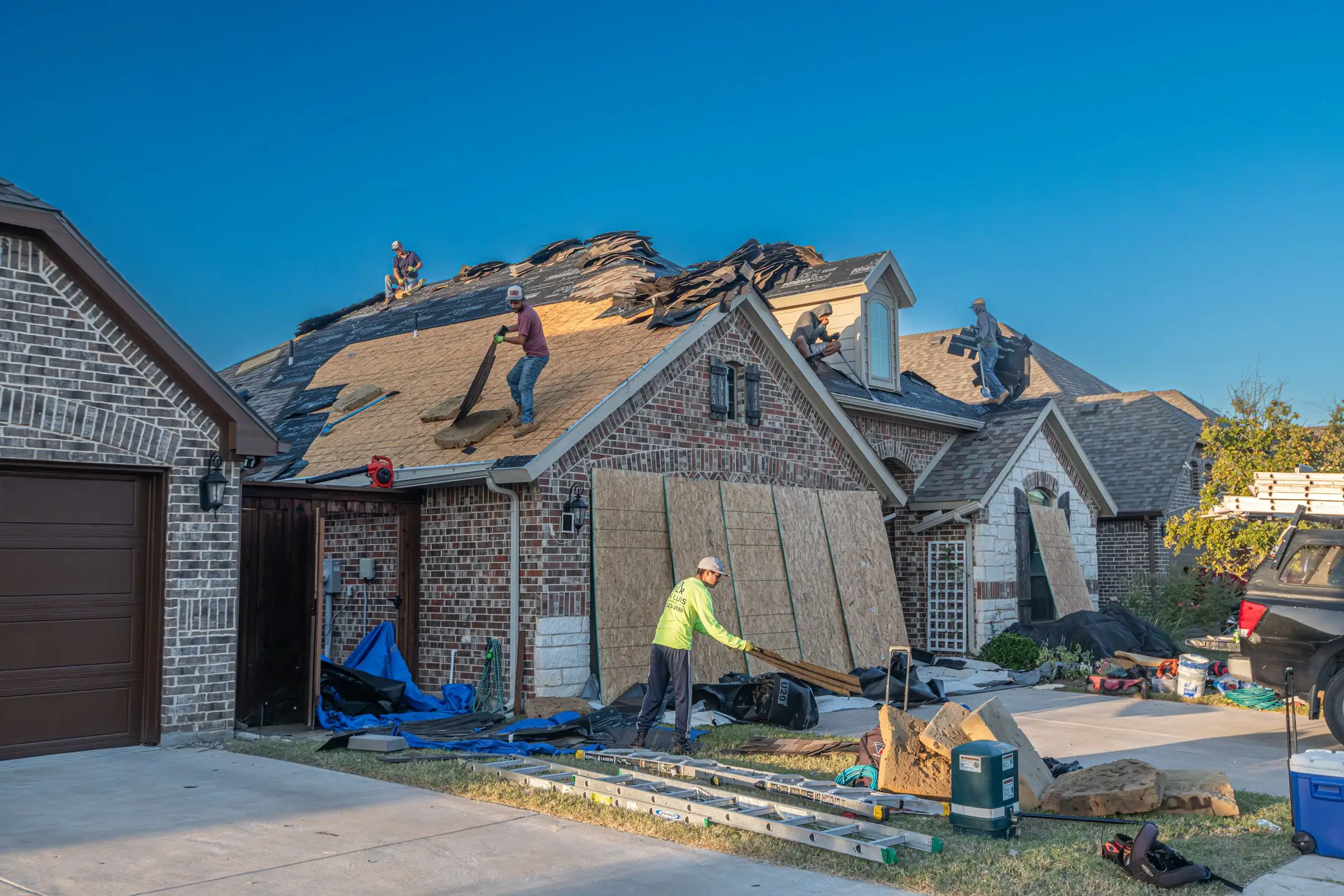
Roof Replacement Cost by material, size and quality tier
Priced by the square, quoted as one number, and made of three. Here is how that number is built.
What a new roof costs
Most American homeowners pay $6,000 – $25,000 to replace a roof, and the majority of those jobs are asphalt shingles on a straightforward house. Metal, tile and slate all cost more per square foot and last longer, which is the entire trade in one sentence.
Roofing is sold by the square, meaning 100 square feet of roof surface. A contractor measures your roof, counts the squares, and multiplies by a rate that already bundles material, labor, underlayment and overhead. That is why two bids on the same house can differ by thousands without either being dishonest: they are pricing different products at different rates.
This guide takes that single number apart. It prices every common material, scales the job by roof size, splits the bill into product and labor, and lists the surcharges that get added after the base. Read it in order and you will be able to tell whether a bid is high, low, or simply describing a different job than the one you asked for.
Nothing here asks for your address or your phone number. When you want real bids, the checklist near the bottom of this page tells you what a serious quote has to contain.
What each roofing material costs installed
Installed cost per square foot, covering both material and labor on a straightforward roof. The total column prices each material on a 2,000 sq. ft. roof so the spread is visible in dollars rather than percentages.
| Material | Installed cost per square foot, installed | Lifespan | On the worked example | Who it suits |
|---|---|---|---|---|
| Asphalt shingles | $4.50 – $9 | 15 – 30 years | $9,000 – $18,000 | The default, and for a reason: lowest entry cost, and every crew in the country installs it. The band runs from basic 3-tab at the bottom to architectural at the top, and so does the lifespan. |
| Wood shake | $8 – $15 | 25 – 40 years | $16,000 – $30,000 | Handsome and high-maintenance. Restricted or surcharged in wildfire country; check your code first. |
| Metal | $10 – $16 | 40 – 70 years | $20,000 – $32,000 | Priced here as standing seam, the concealed-fastener roof worth buying on a house you intend to keep. Exposed-fastener panel costs roughly a third less and is a different product with a shorter life. |
| Clay or concrete tile | $11 – $25 | 50 – 100 years | $22,000 – $50,000 | Heavy enough to need a structural check. Budget that inspection before you price the tile. Concrete sits at the bottom of the band and clay at the top. |
| Natural slate | $25 – $32 | 75 – 150 years | $50,000 – $64,000 | A hundred-year roof, installed by specialists. Repairs cost more too; plan on keeping spare stock. |
Roof area is not house footprint. A 2,000 sq. ft. house usually carries 2,200 to 2,600 sq. ft. of roof once pitch is counted, so measure the roof or ask the contractor for the square count before you compare these figures to a bid.
How roof size changes the cost
The same mid-range asphalt shingle roof, priced across the sizes most American houses fall into. Cost scales almost linearly with area, which is why an accurate measurement is the first thing to check on any quote.
| Roof area | Project cost mid-range asphalt shingles |
|---|---|
| 1,000 sq. ft. | $5,600 – $7,900 |
| 1,500 sq. ft. | $8,400 – $11,800 |
| 2,000 sq. ft. | $11,300 – $15,800 |
| 2,500 sq. ft. | $14,100 – $19,700 |
| 3,000 sq. ft. | $16,900 – $23,600 |
These are base figures before tear-off, pitch, complexity or permits. Every one of those is priced on top; the surcharge table further down shows what each adds.
Economy, mid-range and premium roof costs
The same asphalt roof at three levels of product and workmanship, on a 2,000 sq. ft. roof. The bands overlap because real bids do: a well-run economy job and a poorly run premium one meet in the middle.
| Tier | Per unit | Project cost on 2,000 sq. ft. | What it buys |
|---|---|---|---|
| Economy | $4.50 – $6.08 | $9,000 – $12,200 | Builder-grade product, a crew working fast, and the simplest version of the job. Buys the function, not the finish. |
| Mid-range | $5.63 – $7.88 | $11,300 – $15,800 | What most homeowners actually sign. Mid-tier product from a named manufacturer, a licensed crew, and a warranty worth reading. |
| Premium | $7.20 – $9 | $14,400 – $18,000 | Top of the product line, specialist installers, and the detailing that decides how the job looks in year fifteen. |
The difference between these tiers is rarely the shingle alone. It is the underlayment, the flashing, the ridge venting, and whether the crew details the valleys and penetrations properly. Those are the parts that decide how the roof looks in year fifteen.
Roofing materials versus labor
On a 2,000 sq. ft. roof in mid-range asphalt shingles, $11,300 – $15,800 before add-ons, the bill divides like this.
- Materials $4,500 – $6,300
- 40% of the bid Shingles, underlayment, ice-and-water barrier, flashing, ridge vent and fasteners. What is left on the roof when the crew drives away.
- Labor and overhead $6,800 – $9,500
- 60% of the bid The crew, the tear-off, the dumpster and disposal, the permit, insurance, and the company behind the warranty.
The ratio moves with the material. Shingles are mostly labor, because the product is cheap and the work is the same either way. Slate and metal invert it: the material carries the cost, and a specialist crew is the reason it lasts. Surcharges land on the labor side, since a steep or complex roof costs hours, not extra shingles.
What gets added to a roof replacement bid
These are the line items that turn a per-square rate into a final invoice. Each is shown as a share of the base cost and in dollars on the worked example, because a percentage on its own is easy to wave through.
| Line item | Surcharge share of the base cost | On the example | What it covers |
|---|---|---|---|
| Tear-off, one layer | +8% – 15% | $900 – $2,400 | Stripping the existing roof to the deck. Covers labor, dumpster and disposal fees. |
| Tear-off, two or more layers | +15% – 28% | $1,700 – $4,400 | Twice the debris and twice the disposal weight. Common on houses that took an overlay last time. |
| Steep pitch, above 7:12 | +10% – 22% | $1,100 – $3,500 | Above roughly 7:12 a crew needs staging and harnesses, and lays fewer squares a day. |
| Complex roofline | +10% – 25% | $1,100 – $4,000 | Valleys, dormers, chimneys and skylights. Every penetration is cut, flashed and sealed by hand. |
| Difficult access | +5% – 12% | $550 – $1,900 | No driveway for the dumpster, tight lot lines, or landscaping the crew has to protect and work around. |
| Deck repair | +5% – 18% | $550 – $2,800 | Rotten sheathing found at tear-off. Honest bids price this per sheet as a contingency, not upfront. |
| Permits and inspection | +2% – 6% | $250 – $950 | Required in most jurisdictions for a full replacement. A bid that skips the permit is a bid that skips the inspection. |
A bid that itemizes these is not more expensive than one that does not; it is more legible. Ask any contractor who quotes a single lump sum to break out tear-off, permits and deck repair separately, and compare those lines across bids rather than comparing totals.
How location affects roof replacement cost
Roofing labor is local, so the same job carries a different rate across the country. These are indicative multipliers on the national figure, not local quotes, and the spread inside a region is often wider than the spread between regions.
| Region | Multiplier | Project cost on the worked example | Why it moves |
|---|---|---|---|
| Northeast | 1.10× – 1.25× | $12,400 – $19,800 | Highest labor rates in the country, older housing stock, and snow-load requirements that add material. |
| West | 1.05× – 1.30× | $11,900 – $20,500 | Wide internal spread. Coastal metros price like the Northeast; the interior sits near the national middle. |
| Midwest | 0.92× – 1.05× | $10,400 – $16,600 | Closest to the national number. Deep contractor supply keeps competitive pressure on quotes. |
| South | 0.85× – 1.00× | $9,600 – $15,800 | Lowest labor cost, but storm exposure raises material specification and insurance-driven demand spikes. |
Home Palais publishes no page per state, city or ZIP code. Local pricing changes faster than any static table can track it, and a multiplier you can apply yourself is more honest than a number that claims to know your market.
How to read a roofing bid
By the time you are comparing quotes, the cost question has become a contractor question. These two lists are what separates a bid worth taking seriously from one that is going to cost more than it says.
Red flags
Walk away from a roofing bid if
- The bid is a single number with no breakdown of material, labor and tear-off.
- There is no written scope: shingle brand and line, underlayment type, flashing, and ventilation should all be named.
- The contractor cannot produce a license number and a certificate of insurance covering both liability and workers compensation.
- You are asked for a large deposit up front. A materials deposit is normal; paying most of the job before work starts is not.
- The quote skips the permit, or suggests the job does not need one. That is the inspection being skipped, not the paperwork.
- The price drops sharply the moment you hesitate. A rate that was negotiable by thousands was never a measured rate.
- The offer is only good today. Roofs do not have flash sales; sales tactics do.
Questions
Ask every roofing contractor
- How many squares did you measure, and how did you measure them?
- How many layers are coming off, and what happens if you find rotten decking underneath?
- Which underlayment and ice-and-water barrier are you using, and how far up from the eave?
- Who is actually on my roof: your crew, or a subcontractor? Who supervises them?
- What does the manufacturer warranty cover, what does your workmanship warranty cover, and how long does each run?
- What is the payment schedule tied to: dates, or completed stages?
- How do you protect the yard, the gutters and the landscaping, and who cleans up the nails?
What homeowners ask about roof replacement cost
Why do roofing quotes vary so much on the same house?
Because they are rarely quoting the same job. Different shingle lines, different underlayment, tear-off included or excluded, and different assumptions about deck repair all move the number. Compare the scope line by line before you compare the totals.
Is a roof cheaper in winter?
Usually yes, in late winter and early spring. Crews book out through summer and fall, and slow-season scheduling gives you room to negotiate. Emergency work after a failure is the most expensive way to buy a roof, whatever the month.
Does homeowners insurance pay for a new roof?
It pays for sudden damage from a covered event such as a storm, not for a roof that wore out. Most policies now settle older roofs at actual cash value, meaning depreciation comes off the check. Read the roof schedule in your policy before you need it.
How much does tear-off add?
Stripping one layer typically adds 8 to 15 percent of the base cost, and two or more layers adds considerably more, because disposal is priced by weight. It is the single line item most likely to be quietly excluded from a low bid.
Can I finance a roof replacement?
Yes, and most roofing companies offer it. Contractor financing is convenient but rarely the cheapest money available; compare the rate against a home equity line or a personal loan before you sign, and check whether the quoted price assumes financing.
Is a more expensive roof worth it?
Divide the installed cost by the expected lifespan and compare cost per year. On that measure metal and slate often beat asphalt. The catch is that you pay the whole premium now and collect the savings over decades, which only pays off in a house you intend to keep.
Figures on this page are indicative national brackets, not quotes. Your number depends on the size, complexity and condition of the job itself, and on what local crews are charging when you buy. Use them to judge a bid, not to replace one.
Cost data
- ProjectCostPro, Roofing cost calculator: asphalt, metal, tile, slate (opens in a new tab) Checked August 12, 2026
- SERVPRO, How long does a roof last? Lifespan by roofing material (opens in a new tab) Checked August 12, 2026
- RoofingCalculator, Roofing calculator: cost per square foot by material (opens in a new tab) Checked August 12, 2026
Projects that pair with a new roof
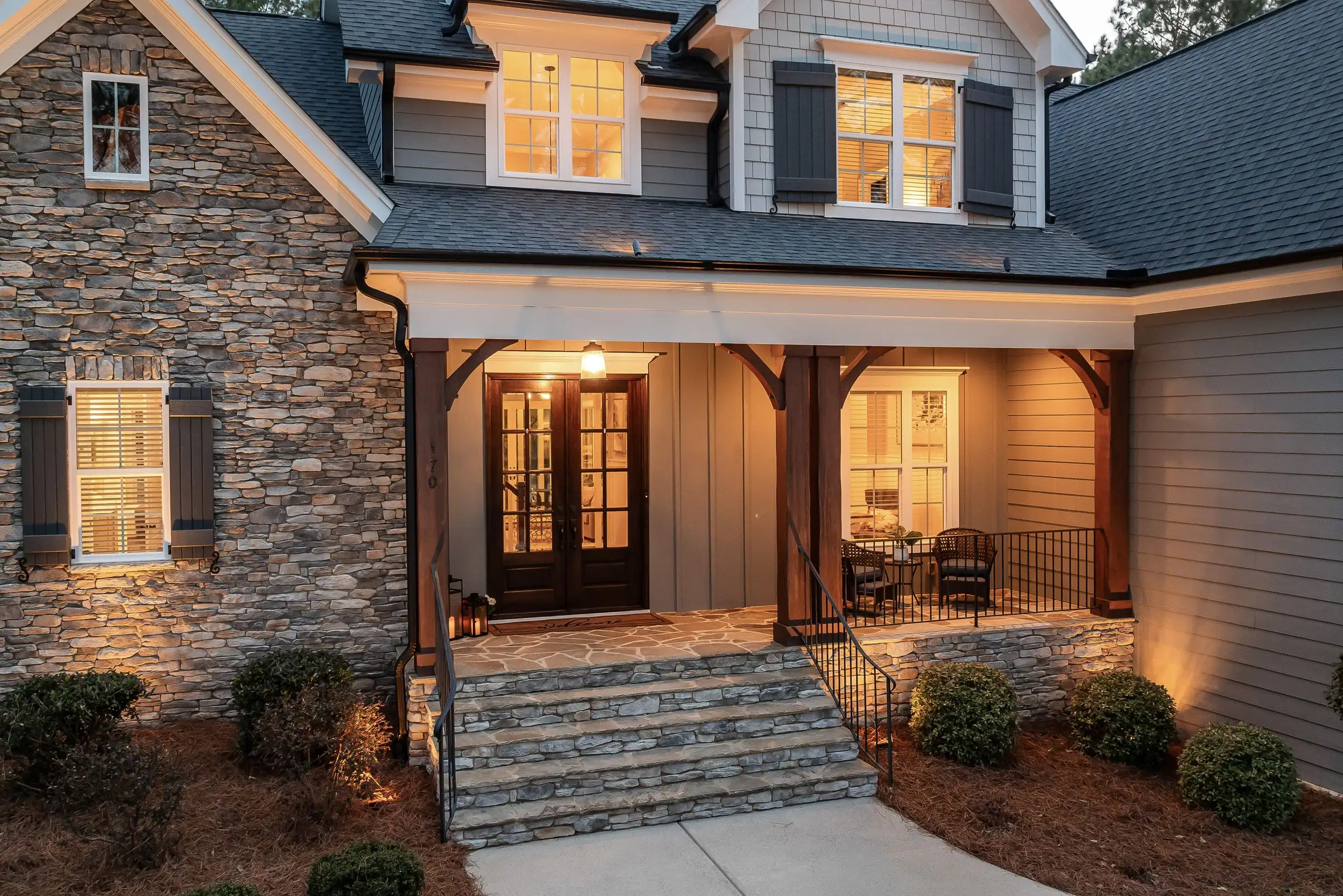
The calculator runs on the same national data as every table on this page; no phone number, no lead form.
Price your own roof Before the first bid