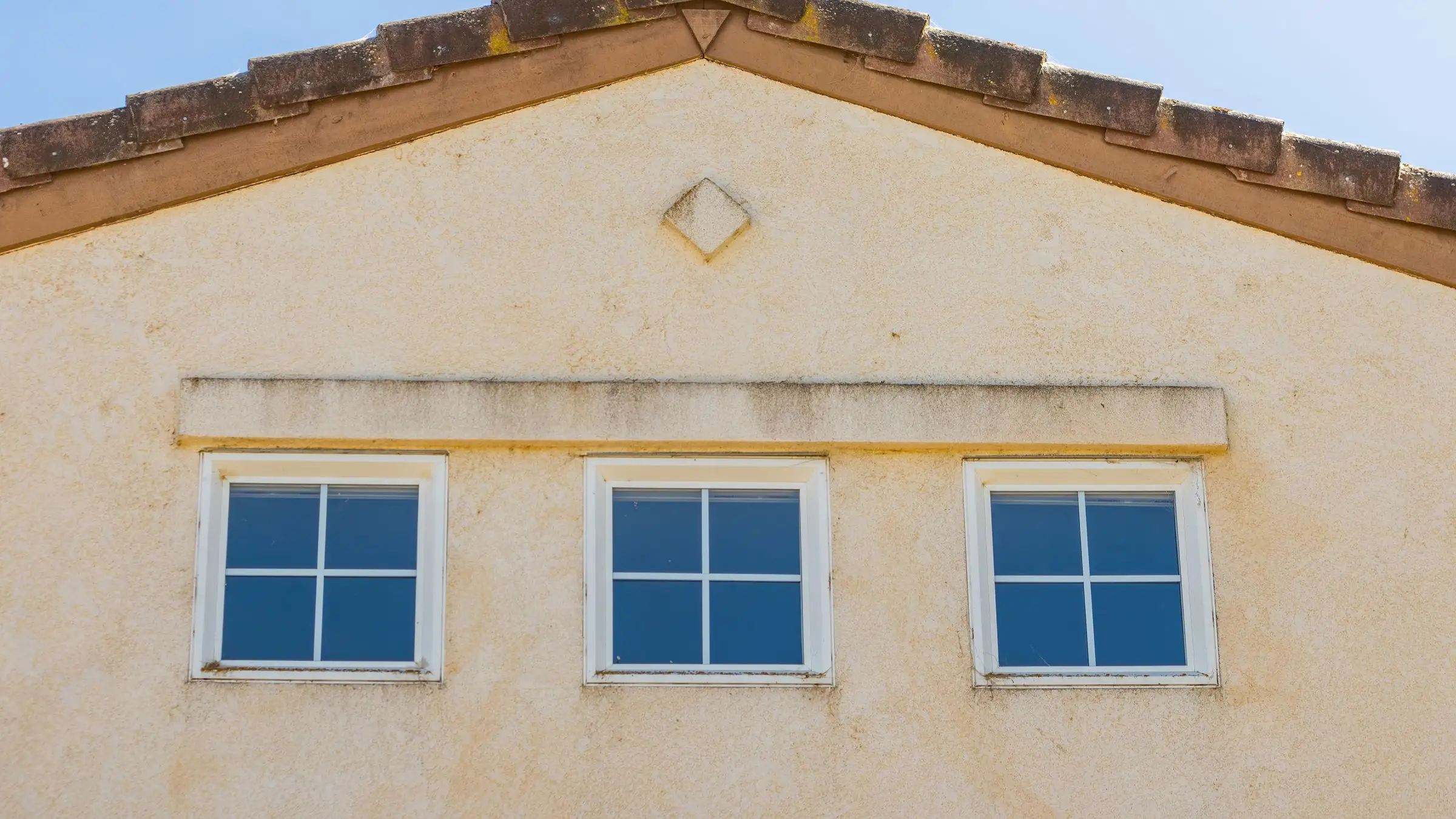
Three evenly spaced windows in a plain rendered facade under a gable

Vinyl vs Fiberglass Windows cost, lifespan and which frame suits your house

The two frames that actually compete. One is cheaper today; the other is still square in thirty years.

Scroll

Start with the answer

Vinyl or fiberglass windows: which frame to buy

Ten openings run $8,100 – $16,000 installed across the two, with fiberglass at the top of that spread and vinyl at the bottom. Fiberglass costs roughly forty percent more and lasts around half again as long, which makes it the cheaper frame per year and the harder one to justify on the day.

The material difference is one property: thermal expansion. Fiberglass is made of glass, so the frame and the pane grow and shrink at nearly the same rate through every summer and winter. Vinyl moves considerably more, and that differential is what works the insulated glass seal loose over twenty-odd years. It is the reason the lifespans differ, and it is not a manufacturing quality anyone can fix.

That makes this decision less about windows than about how long you intend to own the house, exactly like the roofing comparison. It also makes it about color: dark vinyl in direct sun can distort, and dark fiberglass will not, which quietly rules out one of them on a lot of facades.

Everything below prices both options from the same national dataset, at the same quality tier, on the same ten openings.

Side by side

Vinyl and fiberglass window frames side by side

Fiberglass

Pultruded glass-fiber frames, the strongest of the mainstream materials.

Installed on 10 openings at mid-range quality $11,000 – $16,000

Cost per year of service $220 – $533 a year

  • Expands at almost the same rate as the glass it holds, so seals last
  • Can be painted, and holds dark colors without distorting
  • Narrow frames for the same strength, so more glass in the same opening
  • Fewer manufacturers and fewer crews who fit it well
Vinyl

Extruded PVC with hollow chambers, on roughly seven of ten American replacements.

Installed on 10 openings at mid-range quality $8,100 – $11,400

Cost per year of service $270 – $570 a year

  • The best insulation per dollar of any frame here
  • Every installer fits it, so bids are genuinely competitive
  • Color is chosen once at the factory and cannot be changed
  • Moves more than glass in the heat, which is what eventually ends the seal

Fiberglass is the cheaper frame to own and the more expensive one to buy. Vinyl is the opposite, and it is the right answer for most houses because most houses are sold before the difference is collected. Pay the premium when you are staying, when you want a dark color, or when the openings are large enough that frame strength stops being theoretical.

The numbers

Vinyl vs fiberglass window cost and lifespan

Installed cost per opening, covering the unit and the labor on a straightforward replacement, with the project total priced on the same ten openings so the spread reads in dollars rather than percentages.

Option Installed cost per window, installed Lifespan On the worked example 10 openings at mid-range quality Who it suits
Fiberglass $850 – $1,850 30 – 50 years $8,500 – $18,500 Moves at almost the same rate as the glass it holds, so the seals last. The quiet premium choice on a house you keep.
Vinyl $650 – $1,300 20 – 30 years $6,500 – $13,000 What most American houses get, and rightly: the best insulation per dollar. It cannot be painted and it is what it is for good.

Both are shown before the surcharges a window job carries: full-frame rather than insert replacement, unusual sizes, bay and bow units, and any trim repair. Those apply to either frame and are covered in the window cost guide.

Cost per year

Vinyl and fiberglass window cost per year of service

Installed cost divided by expected service life. It is the only fair way to weigh a frame that costs forty percent more and lasts around half again as long, and it is where the argument for fiberglass is made.

Option On the worked example Lifespan Cost per year of service
Fiberglass $11,000 – $16,000 30 – 50 years $220 – $533
Vinyl $8,100 – $11,400 20 – 30 years $270 – $570

The bands are deliberately wide: the low figure assumes a good install reaching the top of its expected life, the high figure a dear one failing early. What ends a window is almost always the insulated glass seal rather than the frame, and on both materials a fogged unit can often be reglazed rather than replaced, which neither column credits.

The decision

Which window frame belongs on your house

Both are good windows, and one of them is the default for good reason. These two lists are the honest version of the question.

Fiberglass

Choose fiberglass windows if

  1. You expect to own the house for twenty years or more and would rather buy the windows once.
  2. You want a dark exterior color. Vinyl in a dark finish absorbs heat and can distort; fiberglass does not.
  3. The openings are large. A narrower frame at the same strength means more glass and less structure in the view.
  4. Your climate swings hard between seasons, which is exactly the condition that works a vinyl seal loose.
  5. You want the option to repaint later rather than living with one factory color for the life of the window.
  6. You are replacing everything at once and the premium is a percentage of a number you are already committed to.

Vinyl

Choose vinyl windows if

  1. You might sell within ten years. The premium on fiberglass mostly transfers to the buyer without transferring to the price.
  2. The budget decides whether the job happens now or gets postponed. A vinyl window fitted this year beats a fiberglass one fitted in three.
  3. You want the widest field of bidders. Every crew fits vinyl, and competitive bids are worth real money on a ten-window job.
  4. White or a light color is what you want anyway, which removes the strongest non-financial argument for fiberglass.
  5. You would rather put the extra money into the glass package than into the frame, which on most houses buys more comfort.
  6. You are replacing a few openings rather than the house, where the per-window premium is hardest to recover.

Quick answers

What homeowners ask about vinyl versus fiberglass windows

Is fiberglass really worth 40 percent more than vinyl?

On cost per year of service, yes. On a house you might sell inside a decade, no. The premium is real and so is the extra life, and which of those you actually collect depends entirely on how long you stay.

Which one insulates better?

They are close enough that the glass package matters more than the frame. Vinyl chambers hold still air and insulate very well for the money; fiberglass is comparable and can be foam-filled. Compare the U-factor on the NFRC label of the actual units being quoted rather than arguing about the material.

Can I get a dark color in either?

In fiberglass, yes, and it can be repainted later. In vinyl, dark finishes exist but absorb far more heat, and the frame can distort in direct sun. If a dark exterior is not negotiable, that single fact usually settles this comparison.

Why do vinyl windows fail before fiberglass?

Because vinyl expands and contracts much more than the glass it holds. Every hot day and cold night works that differential against the insulated glass seal, and after twenty-odd years the seal lets go and the pane fogs. Fiberglass moves at nearly the same rate as glass, so the seal is worked far less.

Is fiberglass harder to find installers for?

Somewhat. Fewer manufacturers make it and fewer crews fit it every week, which means fewer bids and less price competition. On a large job that is worth planning around; get quotes earlier and expect a narrower field.

What about composite and clad wood?

Both are worth pricing if this comparison is close. Clad wood buys a wood interior with a maintenance-free exterior and costs more than either of these. Composite sits between vinyl and fiberglass on price and varies enormously by manufacturer, so judge it on the NFRC label rather than the category.

Figures on this page are indicative national brackets, not quotes. Your number depends on the size, complexity and condition of the job itself, and on what local crews are charging when you buy. Use them to judge a bid, not to replace one.

Keep planning

Projects that pair with new windows

Empty room with hardwood floor lit by two tall windows

The calculator prices both frames by the opening on the same national data as every table on this page; no phone number, no lead form.

Price both frames Before the first bid